

Choosing an engagement ring in 2026 looks very different from choosing one a decade ago. There is no single style everyone is expected to want. Couples are paying more attention to personality, comfort, stone shape, setting, metal color, and how the ring fits into everyday life.
Current bridal data reflects that shift. The Knot’s 2026 Real Weddings Study reports that 88% of couples made custom edits or chose a custom-designed ring, while lab-grown center stones represented 61% of engagement ring purchases. Round and oval diamonds remain the two most popular shapes, while yellow gold, elongated cuts, antique-inspired stones, chunkier bands, and nontraditional settings are gaining attention.
If you are comparing the different styles of engagement ring designs available today, the biggest 2026 trend is simple: choose a ring that feels personal.
Classic Solitaire Rings With a Modern Update
The solitaire is not disappearing. It remains one of the strongest engagement ring styles because it gives the center stone all the attention.
What is changing is the way the solitaire is designed. Instead of automatically choosing a very thin pavé band with a high-set diamond, couples are experimenting with wider bands, lower profiles, hidden details, bezel settings, and warmer metals.
A round solitaire still feels timeless, while an oval, marquise, or elongated cushion can make the same simple setting feel more current. Four-prong settings are also appealing to buyers who want less visible metal around the diamond. Vogue’s 2026 engagement-ring coverage similarly points to classic silhouettes being reworked through more individual settings and proportions.
It is a strong choice for someone who wants something timeless with a modern detail or two.
Oval and Elongated Diamond Rings
Elongated shapes are everywhere in 2026. Oval diamonds remain especially strong: The Knot’s latest data places round diamonds at 26% of centre-stone shapes and ovals close behind at 25%.
The appeal is easy to understand. An oval gives you brilliant-cut sparkle while creating a longer silhouette on the finger. Elongated cushion cuts offer something softer, combining rounded corners with a more rectangular outline. Marquise and pear shapes also fit naturally into the same movement.
What is changing is how these stones are styled. Instead of appearing only on ultra-thin bands, elongated diamonds are being paired with bezels, wider yellow-gold bands, hidden halos, three-stone settings, and more sculptural mountings.
For someone who wants a clean ring with a little more visual presence than a traditional round solitaire, elongated shapes are one of the strongest options this year.
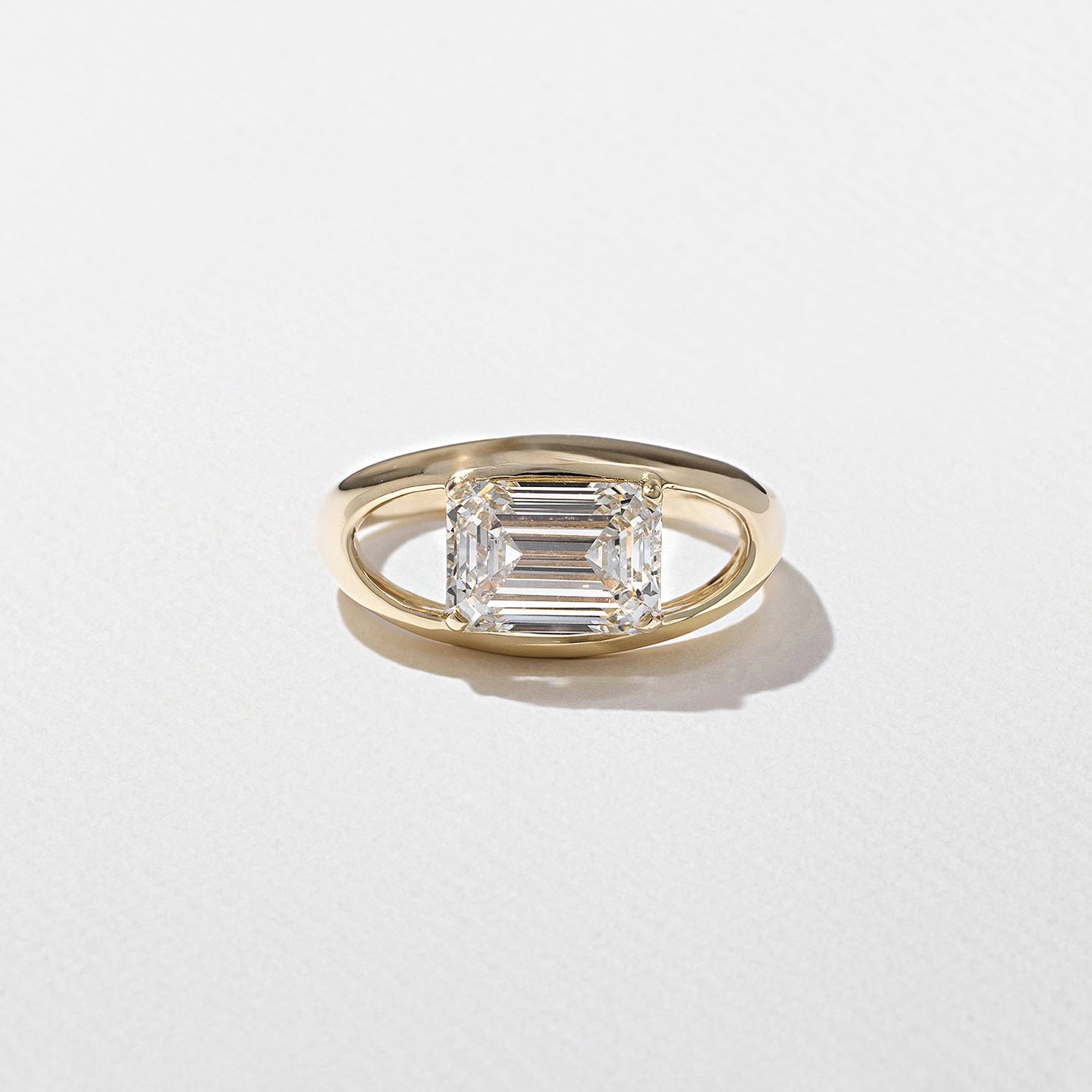
East-West Engagement Rings
One of the easiest ways to make a familiar diamond shape feel different is simply to turn it sideways.
That is exactly what an east-west setting does. Instead of placing an oval, emerald, marquise, pear, or elongated cushion vertically along the finger, the stone sits horizontally across it.
The result feels modern without being complicated. It works as a simple solitaire, a bezel-set ring, or a thicker gold design and has become more visible through celebrity engagement rings and designer collections. Current industry coverage identifies east-west settings as one of the styles gaining traction among couples looking for less conventional bridal jewelry.
If traditional solitaires are starting to look too similar, an east-west setting keeps the stone recognizable while giving the ring a different personality.

Bezel-Set Engagement Rings
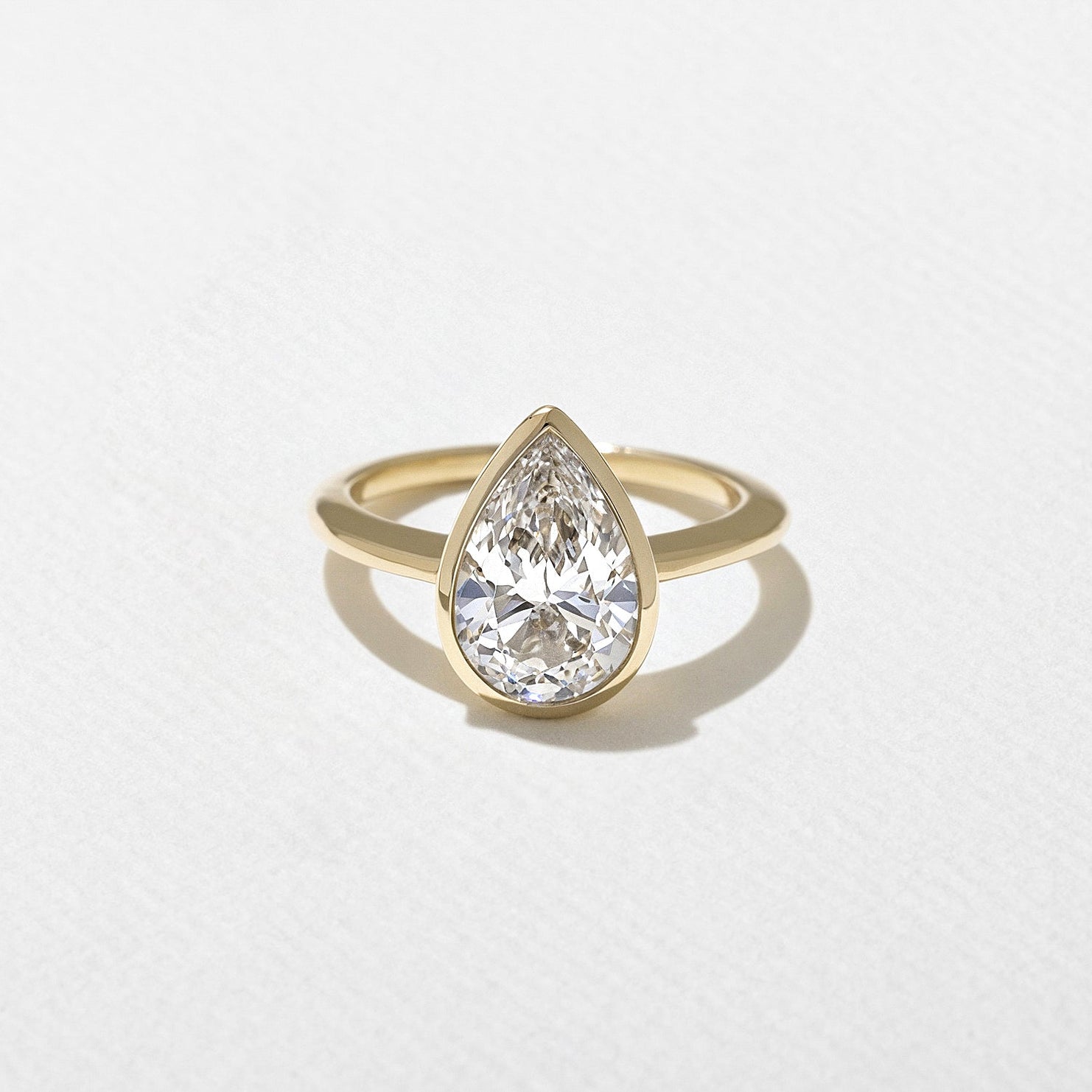
Prongs will always be classic, but bezel settings are having a major moment in 2026.
A bezel surrounds all or part of the center stone with a rim of metal. That creates a smooth outline and gives the ring a clean, contemporary look. It can also offer additional protection around the stone’s edge, which makes it appealing for people who use their hands often or prefer a lower-profile everyday design.
Bezel settings work particularly well with oval, emerald, marquise, pear, and elongated cushion diamonds. Depending on the band, the same setting can look minimal, vintage-inspired, architectural, or bold.
A bezel can therefore feel either quiet and refined or bold and architectural. When paired with yellow gold and an elongated center stone, it creates one of the most recognizable engagement-ring looks of 2026.

Chunky Gold and Wide-Band Rings
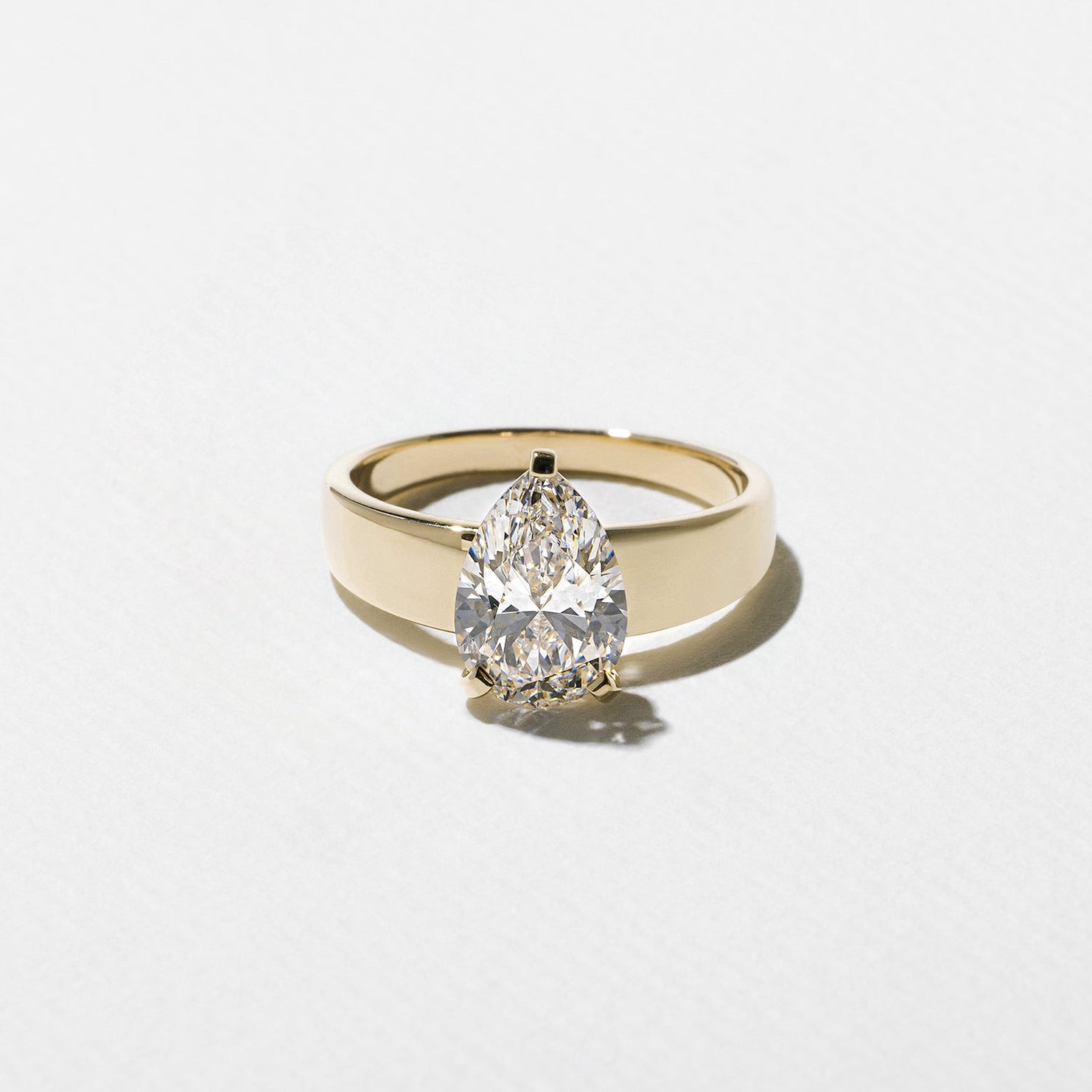
For years, delicate bands dominated engagement-ring imagery. In 2026, the pendulum is moving in the opposite direction.
Wider yellow-gold bands, bold signet-inspired silhouettes, and substantial metal profiles are becoming serious alternatives to thin pavé bands. The centre stone may be bezel-set, flush-set, half-bezel-set, or mounted slightly above the band.
The overall look is confident but surprisingly simple. Rather than adding more small diamonds, the design relies on the proportion of the metal and the centre stone.
Yellow gold is especially important here. The Knot reports that it now represents 39% of engagement-ring metal choices, while JCK has identified substantial yellow-gold bands as one of 2026’s defining bridal looks.
A wider band is a strong option for someone who likes modern jewelry or wants the ring itself to have presence even without a large amount of pavé.

Vintage-Inspired and Antique-Cut Rings
Not every 2026 trend looks futuristic. Some of the most interesting rings are looking backwards.
Old mine cuts, old European cuts, antique cushions, rose cuts, milgrain, Georgian-style settings, and Art Deco-inspired details are attracting buyers who want a ring with more character.
Antique-style diamonds can have broader, softer facet patterns than modern precision-cut stones. Their sparkle often feels less uniform, and that slight irregularity is part of the appeal. Current jewelry coverage has also highlighted elongated old-mine and antique cushion cuts as particularly important in 2026.
You do not need to buy an actual antique ring to get this look. A new ring can borrow vintage design language while using a modern setting, a lab-grown center stone, or custom proportions.
For couples who want something romantic but not overly traditional, this is one of the most interesting different styles of engagement ring design to explore.
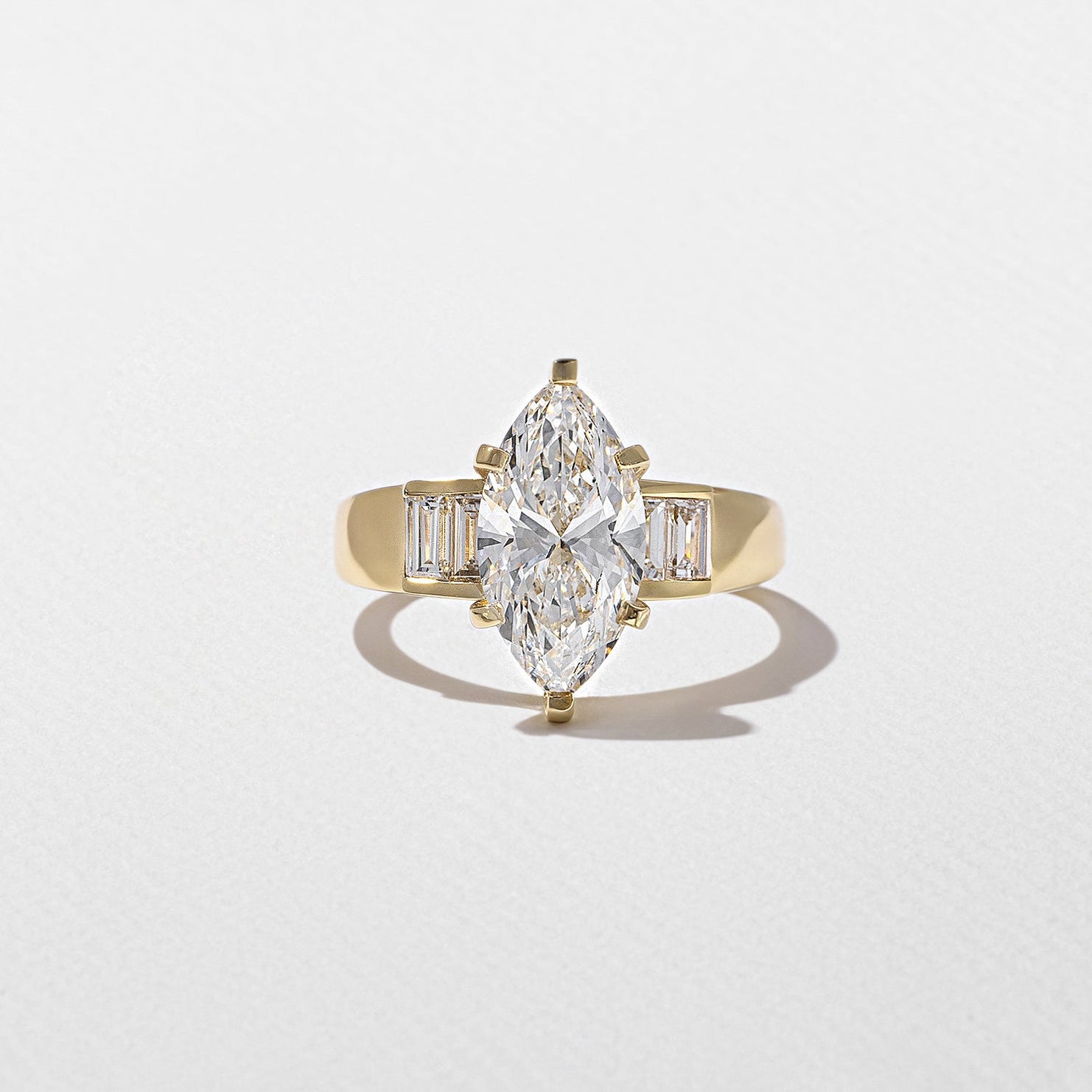
Marquise-Cut Engagement Rings
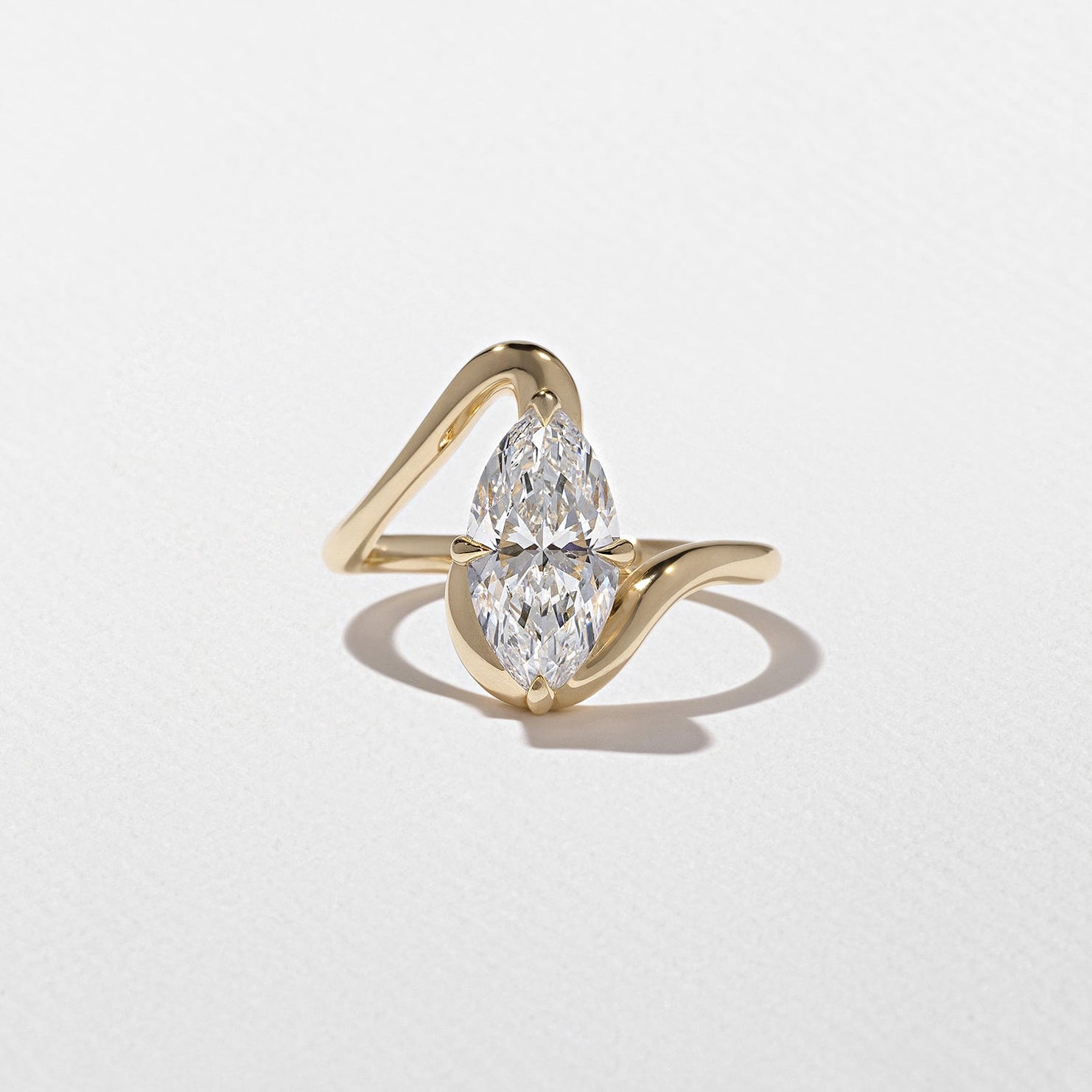
The marquise is firmly back in the conversation.
Its long shape and pointed ends make it one of the most distinctive diamond cuts, and it naturally creates a dramatic look on the finger. For a long time, marquise diamonds were associated with older engagement-ring styles. Designers are now resetting them in ways that feel much fresher.
A marquise can be worn vertically for an elegant silhouette or horizontally in an east-west setting for a more fashion-forward look. It also works well in bezels, three-stone rings, and minimal solitaires.
Vogue’s 2026 trend reporting specifically highlights marquise diamonds, elongated shapes, and east-west orientations as part of the move toward more distinctive ring silhouettes.
Because of its elongated outline, a marquise can also create strong visual coverage. The important thing is to choose proportions you genuinely like rather than simply going for the longest stone possible.
Three-Stone and Toi et Moi Rings
Solitaire rings may still lead the market, but couples looking for more symbolism are turning to multi-stone designs.
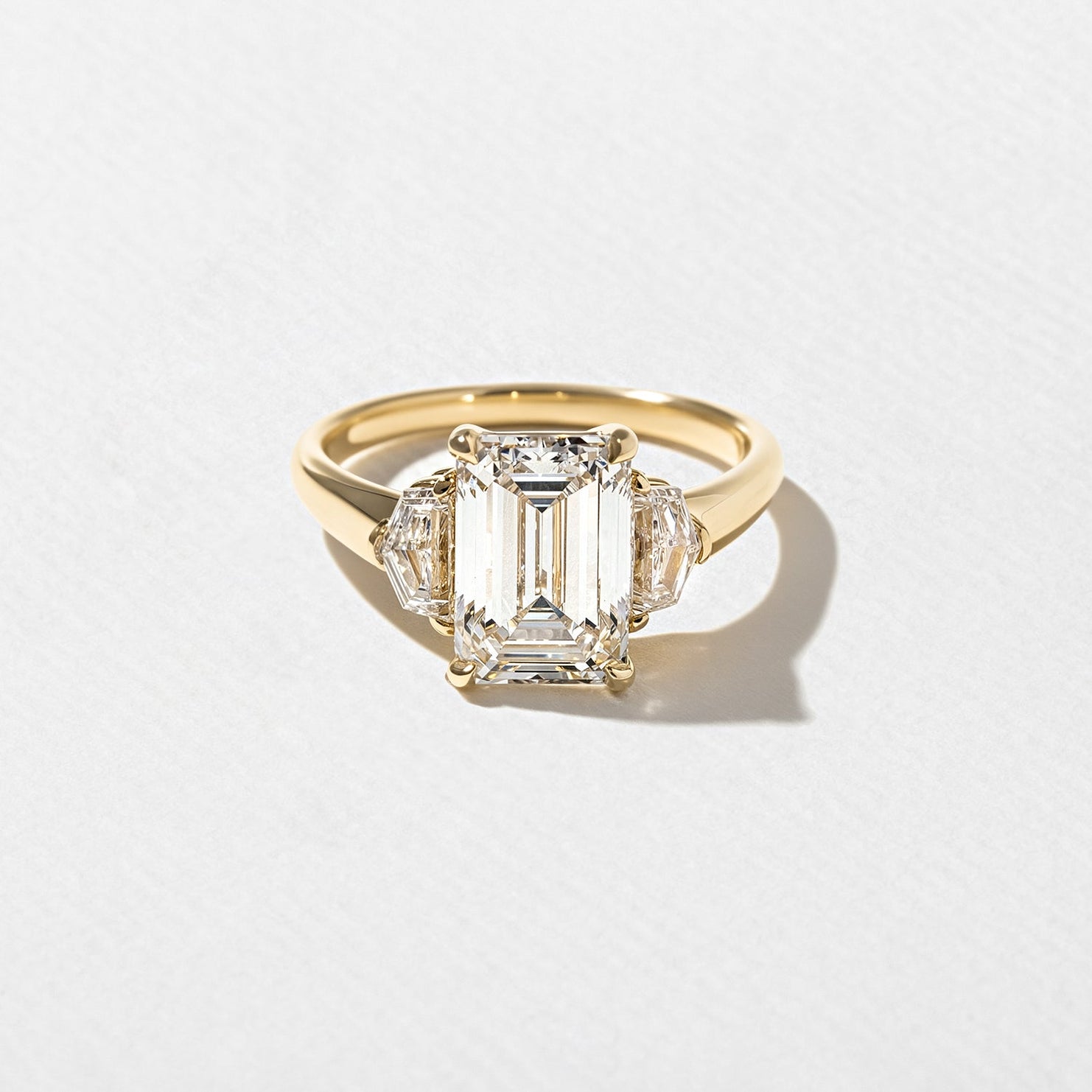
A three-stone ring traditionally represents the past, present, and future of a relationship. In 2026, these rings are becoming less predictable. An elongated centre diamond might be paired with tapered side stones, pears, half-moons, or contrasting cuts.
Toi et moi rings take the idea further by placing two centre stones together. The stones can match, or they can deliberately contrast, for example, an oval with a pear, or a diamond with a sapphire.
Industry reporting on alternative bridal jewelry shows continued demand for toi et moi rings, asymmetrical designs and unconventional stone combinations as couples move away from one-size-fits-all engagement-ring styling.
These designs are especially useful for couples who want the ring to tell a story rather than simply showcase one centre stone.

Colored and Warm-Tone Engagement Rings
White diamonds remain the dominant choice, but more couples are becoming comfortable with color.
Sapphires continue to be one of the strongest non-diamond options, while champagne, yellow, honey, and brown-toned diamonds are receiving more attention in designer and editorial jewelry.
Champagne diamonds in particular have attracted renewed attention in 2026 as buyers look for stones with warmer tones and more individual character.
The 2026 color trend is not necessarily loud. Soft, earthy, or warm tones work naturally with yellow or rose gold and can make even a simple solitaire feel distinctive.
Color is especially worth considering if a traditional colorless diamond does not feel personal to you. A subtle champagne diamond or sapphire can still look unmistakably bridal without resembling every other engagement ring.
Custom and Sculptural Engagement Rings
Perhaps the biggest 2026 trend is customization itself.
Rather than choosing between a few fixed designs, more couples want to change the stone shape, band width, setting height, metal, side stones, prongs, or hidden details.
Sculptural bands are part of that shift. Curved profiles, asymmetrical settings, softened signet shapes, organic lines, brushed finishes, and unusual stone placement make the ring feel designed from every angle.
The result does not need to be extreme. A slightly wider band, different side profile, or hidden detail can be enough to make a familiar solitaire feel personal. Industry coverage in 2026 repeatedly points to individuality as the defining direction in bridal jewelry.
Customization also allows couples to take inspiration from a trend without copying it exactly. You may love the look of a chunky ring, for example, but prefer a moderately wider band rather than an oversized one. That small adjustment can make the final design much easier to wear every day.
Where Lab-Grown Diamonds Fit Into 2026 Trends
Lab-grown diamonds are no longer a small alternative category. The Knot’s 2026 study reports that they account for 61% of engagement ring centre stones, up significantly from previous years. The study also found an average centre-stone weight of 2.0 carats among lab-grown diamond rings compared with 1.6 carats for natural-diamond rings.
That shift is influencing design as much as price. When shoppers can consider a larger center stone within their planned budget, they may have more flexibility to explore elongated shapes, side stones, hidden halos, thicker bands, or custom settings.
Lab-grown is not a style by itself. It can work with almost any engagement ring style, from a round solitaire to an east-west marquise or vintage-inspired elongated cushion.
This gives shoppers more freedom to focus on the design they actually want instead of treating carat weight as the only important decision
How to Choose the Right Engagement Ring Style
Trends help you see what is available, but an engagement ring has to work long after 2026 is over.
Start with the stone shape you genuinely enjoy looking at. Then think about how much metal you like seeing, whether you prefer a high or low setting, and how the ring will sit beside a future wedding band.
Your daily routine matters too. Someone who works frequently with their hands may prefer a lower-profile or bezel setting. Someone who wants maximum sparkle may prefer prongs, pavé, or a hidden halo. If you already wear warm-toned jewelry, yellow gold may feel more natural than choosing white metal simply because it is traditional.
Also think about how the ring looks from different angles. Engagement rings are photographed from the top, but you will see the side profile every day. Basket height, prong placement, band thickness, and how closely a wedding band can sit beside it all affect how the ring feels in real life.
Do not feel that every trend needs to go into one ring. The strongest rings usually have one clear point of view.
Frequently Asked Questions
Popular engagement ring styles in 2026 include oval and elongated diamonds, bezel settings, east-west rings, wider yellow-gold bands, vintage-inspired cuts, marquise diamonds, toi et moi designs, and customized solitaire rings.
Oval diamonds remain one of the strongest choices, while marquise, elongated cushion, pear, and emerald-cut diamonds are also gaining attention. Elongated shapes are particularly popular because they create a distinctive look and visually cover more of the finger.
Yes. Solitaire engagement rings remain popular, but many couples are updating the classic design with wider bands, hidden halos, bezel settings, yellow gold, lower profiles, and elongated center stones.
An east-west engagement ring places an elongated center stone horizontally across the finger instead of vertically. Oval, emerald, marquise, and elongated cushion diamonds are commonly used for this style
Yes. Bezel-set engagement rings are trending because of their clean, modern appearance and smooth profile. They are especially popular with oval, emerald, marquise, pear, and elongated cushion diamonds.
Yellow gold continues to grow in popularity, particularly for wider bands, bezel-set rings, vintage-inspired settings, and minimalist solitaire designs.
Yes. Lab-grown diamonds are widely used for engagement rings and can be set in virtually any style, including solitaire, halo, bezel, three-stone, east-west, and toi et moi designs.
Start with the center-stone shape you prefer, then consider your lifestyle, preferred metal, band width, setting height, wedding-band pairing, and how much sparkle you want. Trends can provide inspiration, but comfort and personal style should guide the final choice.